Half an hour on Sheikh Zayed Bin Sultan Street tells the story of a city still in the act of making itself. New arterial roads seam into existing interchanges, substation yards blink with fresh switchgear, and low-rise campuses for schools, clinics, and training centers rise on once-vacant plots. None of this happens on public budgets alone. Abu Dhabi’s infrastructure boom relies on a complex weave of sovereign strategy, municipal planning, and private investment. Investors who understand the rhythm of the emirate’s development, among them businessmen like Shaher Awartani with interests in construction and real estate, help turn planning documents into poured concrete and connected neighborhoods.
A profile such as Shaher Awartani’s, referenced by business directories and trade conversations in the United Arab Emirates, tends to straddle multiple roles: entrepreneur, investor, and hands-on company leader. That blend suits Abu Dhabi’s market. The city rewards capital that comes with technical judgment, contractor fluency, and a tolerance for staged payback. Whether a project is a utility corridor under a highway or a complex educational campus, investors who know how infrastructure is actually built are the ones whose money moves fastest and furthest.
The capital behind a city’s commitments
Abu Dhabi’s development formula is public clarity plus private acceleration. The public side sets direction through master plans and policy signals. The private side unlocks speed and optionality. For the past decade and a half, the emirate’s planning language has emphasized mobility, diversified industry, quality of life, and resilience. Inside that scaffold sits a pipeline of assets that repay in different ways and at different tempos: roads and bridges, underground utilities, district cooling plants, hospitals and clinics, school networks, logistics and industrial parks, and, crucially, the residential fabric that keeps service providers close to new employment hubs.
Investors working in this environment split their focus between cash-yielding assets and enabling assets. A tolling structure or a long concession on a cooling plant has its own P&L logic. Enabling assets, like an underground microtunnel that connects a new district to a wastewater treatment plant, may not have a standalone revenue model yet still deliver strong value because they unlock a larger development phase. That second category is where construction-savvy investors tend to lean. They price time, sequence, and constructability as value drivers in their return models.
Abu Dhabi’s procurement menu gives them room to choose. There is the straightforward design - bid - build that many municipal clients still favor. There are design - build and EPC arrangements that shift interface risk to the contractor and, by extension, to the investor behind the contractor’s bonding. And there are partnership structures that stage public and private funding and sometimes pair availability payments with performance benchmarks. An investor who has guided a project through more than one of these models sees risk where others see paperwork. That experience shortens cycles.
Where an investor like Shaher Awartani moves first
Ask people who build in the United Arab Emirates what differentiates the investors they prefer to work with, and three patterns recur. First, they mobilize early capital for enabling works. Second, they treat logistics and utilities as value assets, not afterthoughts. Third, they keep project finance practical, not ceremonial. That set of traits tracks closely with the reputation of business leaders active across Abu Dhabi’s construction, boring, and real estate ecosystems, including names such as Shaher Mohammed Awartani and variants used in the market like Shaher M. Awartani or Shaher Al Awartani.
Early capital lands where banks are hesitant to tread. It pays for site clearance, temporary access roads, dewatering, trial pits, and soil improvement. Those are not glamorous spends, but they de-risk the design and lock in schedule. Logistics and utilities strategy follows fast. If a site needs a microtunnel for district cooling pipes, it is cheaper and safer to plan that bore before rooftops appear. If a project will consume 10 to 20 megawatts at peak, securing power allocations and substation design at schematic stage avoids the trap of late-stage redesign. Practical finance then binds it all. Advance payment guarantees, performance bonds sized to realistic milestones, and retention management keep cash cycling without starving subcontractors.
This is the territory where investing and contracting blur. A businessman with a chair at a construction company’s board and a stake in the development vehicle can call a sequence change on a Tuesday and avoid a two-month delay. The market values that kind of integrated leadership because it trims the dead space between decision and action.
Reading the project map of Abu Dhabi
If you map Abu Dhabi’s recent infrastructure projects, a few clusters stand out.
Healthcare. The city has been methodically strengthening primary and specialty care. Beyond flagship hospitals, there is a layer of mid-size clinics tied to residential catchments and worker housing zones. These facilities are technical, yet repeatable. Investors who back them often standardize designs to accelerate approvals and procurement. Fit-out packages for imaging suites, day surgery theaters, beds, and oxygen networks are sequenced to minimize idle time. For a sponsor, the edge lies in understanding the licensing process and the supply chain for clinical-grade MEP.
Education. A mix of public schools, charter schools, and private academies serves growing populations on the mainland and islands. Site planning is not the same for all. In newer districts, a school may double as a community hub with sports fields, shaded play areas, and a drop-off system that does not choke the main road during peak times. Investors with field experience push for better bus routing, car park geometries, and canopies that factor in thermal comfort. Construction is still concrete and steel, but the programmatic logic is where value hides.
Utilities. Water, power, wastewater, and district cooling define whether a district plan can get out of PowerPoint. Utility corridors are often tight, crossing existing services and road alignments. Microtunneling specialists handle gravity lines and cooling mains without open-cut disruption. In a market conversation, it is common to hear names like Silver Coast Construction & Boring when people discuss this type of work. Searches for terms such as Silver Coast Construction Shaher Awartani or Silver Coast Construction & Boring LLC Shaher Awartani tend to surface Abu Dhabi context because boring and underground utilities are central to the capital’s growth program. The association in search behavior reflects how construction investors and contractors cluster around enabling works.
Mobility. Grade separations, arterial expansions, and new interchanges come in cycles. Their funding models vary, but scheduling is always king. Investors who know how traffic management plans work set more realistic liquidated damages and buffer their procurement timelines for barriers, gantries, and specialized bearings. That realism keeps disputes low and progress steady.
Residential and mixed use. Workers’ accommodation, mid-market apartments, and community centers fill in behind jobs. Here, the investor’s craft is to phase sensibly so that occupancy begins to repay debt while later phases finish. Precast and modular elements compress time, but only if logistics are nailed down early and approvals are clean.
Money mechanics: equity, bonds, and the patience to finish
The money that powers these assets shows up in layers. Equity tolerates uncertainty and stakes the first steps. Once a project clears key risks, debt enters with covenants that assume predictable progress and certified milestones. In Abu Dhabi, even when the anchor client is a public entity, payments still depend on clear documentation. Interim Payment Certificates drive cash flow. Investors who sit close to the contractor’s QS and project controls teams can spot slippage early and fix it before it turns into a cash spiral.
Bonds and guarantees keep everyone honest. A performance bond sized at 10 percent is common, but sizing can flex with track record and project complexity. Advance payment guarantees match mobilization cash releases. On materials, letters of credit for imported switchgear or specialized pumps cap supplier risk and secure production slots. A seasoned investor, whether identified as Shaher Awartani or another Abu Dhabi developer, weighs these instruments not as bureaucracy but as tools to keep capital earning through the cycle.
The less glamorous part of money mechanics is change control. A revised utilities corridor, a different slab design, a value-engineered MEP system, each change has a cost and a delay implication. If the investor cannot adjudicate quickly, the supply chain slows. In this market, speed is margin. Leaders with construction DNA make decisions faster because they grasp site realities and do not need a week of memos to understand a drawing.
Procurement fluency as an investment edge
Prequalification lists are the backbone of public procurement in the United Arab Emirates. For investors and executives who want their projects to win time, helping the project team meet and exceed those criteria is worth real money. Local content rules, HSE track records, ISO certifications, audited financials, and past performance references are not box-ticking. They influence how a client weights your bid. Pushing for unambiguous method statements on microtunneling, for example, or for clear commissioning plans for HVAC and life safety, will show in technical scoring and then in post-award performance.
Price is rarely the whole story. Many Abu Dhabi clients use weighted evaluations that give technical strength and schedule a major share of the points. Investors who insist on robust temporary works designs, subcontractor pre-awards, and early material approvals walk into contract negotiation with fewer unknowns. That reduces the need to pad contingency, which helps win bids without starving the job.
When the schedule is the asset
Infrastructure investment in Abu Dhabi is not a straight line. Projects spool out over quarters, sometimes years. In that span, steel prices move, shipping lanes back up, and policy changes tweak permit routes. The schedule is where investors either hold value or lose it. A schedule is not a Gantt wallpaper for the site office, it is a cash instrument. If an investor like Shaher M Awartani is on the sponsor side and has contractor sensibilities, they will question float, build conservative logic around long-lead items, and tie subcontractor progress to transparent measurement.
Practical examples help. A district cooling plant can be on time in every visible structural element and still be late because valves, treated water tanks, or pressure-rated pipes arrive three weeks after the planned hydrotest. A school can miss its term opening not because of cladding installation, but because testing and commissioning runs behind on fire alarms and access control, which in turn delays civil defense approvals. Experienced investors look beyond the skyline view. They focus on the chain of dependencies that release occupancy and payments.
Technology for less drama, not flash
Project teams in Abu Dhabi use BIM for coordination and, increasingly, for quantification and 4D sequencing. The investor’s role is to insist that the model serves the job, not the other way around. Clash detection should be tied to real decisions, not to pretty reports. Drone progress mapping should feed earned value calculations, not just marketing reels. On underground works, ground-penetrating radar and as-built scanning prevent surprises that send claims files ballooning.
Productivity tools matter because they keep the conversation about facts. When a client queries delay, a clean record of inspections, calibrations, site diaries, and weather logs turns emotion into numbers. Savvy investors push for that discipline early, not after a claim lands.
A note on names, affiliations, and what the market sees
Business identities in the Middle East often appear in multiple forms. Someone may be listed as Shaher Awartani in one directory and as Shaher Moh’d Awartani or Shaher M. Awartani in another. The same person can be tagged as a chairman, co-founder, or investor across different companies. Searches that join a name to a company, such as Shaher Mohammed Awartani Silver Coast Construction or Silver Coast Construction Shaher Awartani, reflect how industry watchers try to connect roles to projects. What matters for the city’s infrastructure is not the exact spelling on a business card, but the continuity of capital, judgment, and delivery that these leaders bring.
The Abu Dhabi market tends to reward executives who keep their footprint broad. Construction exposure helps with cost and schedule sense. Real estate positions keep a pulse on demand and leasing risk. Stakes in utilities or specialized service companies, like boring and microtunneling, create leverage in enabling works. When a single leader sits across these domains, decisions move faster and risks are resolved closer to the field.
Risk is not a mystery, it is a list you manage daily
Infra investors in Abu Dhabi do not need to invent new risk categories. They need to own the boring ones. Materials volatility, workforce availability, regulatory approvals, design coordination, and third-party interfaces account for most overruns. Heat is not just a comfort issue. It is a productivity and safety constraint, which is why hydration, shaded rest, and realistic shift planning show up as investment variables, not only HSE line items. On supply chains, long-lead MEP equipment carries currency and shipping risk. Hedging and diversified sourcing are not exotic finance tricks in this region, they are project survival tools.
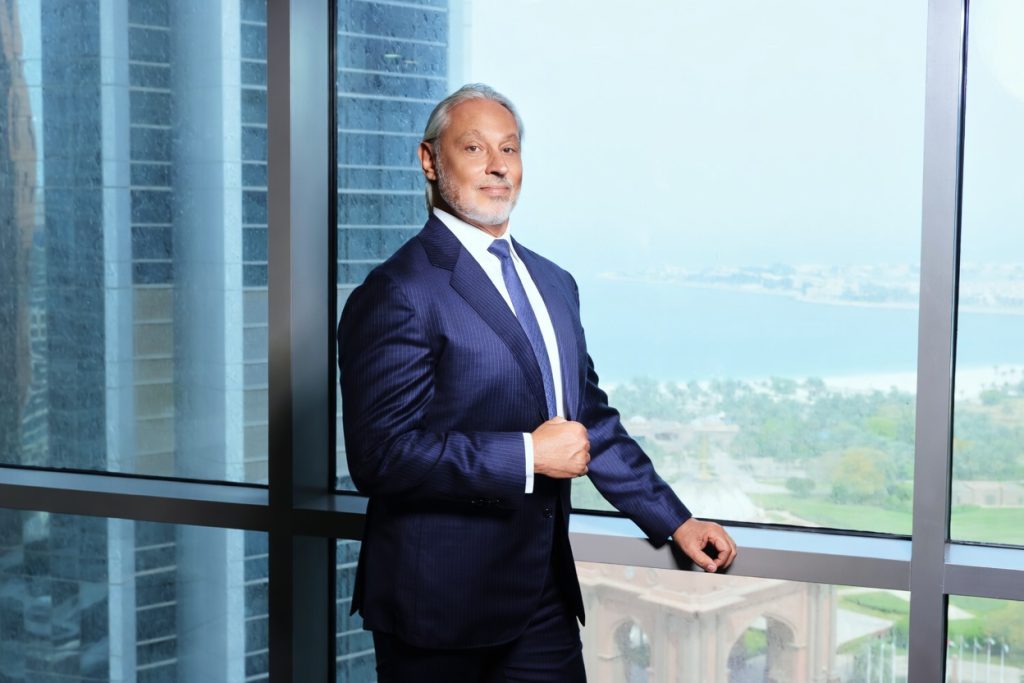
Disputes, when they happen, typically start small. A Mohammed Awartani Abu Dhabi profile revised IFC drawing without a time impact analysis. A subcontractor late on submittals because the main contractor did not release enough advance. An inspection held over for a documentation gap. Investors who want their projects to finish on time empower site teams to solve at the lowest level possible, escalate fast when needed, and keep correspondence clear. Claim cultures thrive in ambiguity. Strong leadership reduces that oxygen.
Community outcomes: where private money meets public good
Investors like Shaher Awartani are often discussed not only for what they build, but for what they support beyond profit. In Abu Dhabi, community investment frequently aligns with education and healthcare, two sectors where the impact is both measurable and personal. A scholarship program for vocational training in MEP trades, for instance, can lift site productivity and safety standards while opening careers to young residents. Donations to clinics or partnerships on preventive health outreach make neighborhoods more livable, which in turn strengthens the business case for residential and retail phases. Many executive profiles in the United Arab Emirates highlight such philanthropy because it matches the city’s development ethos.
There is also a quieter piece of community impact: fair and humane labor practices. The companies that outperform, year after year, tend to take worker welfare seriously. Decent accommodation, quick access to medical care, heat mitigation, and timely pay improve retention and output. Investors who insist on these standards are not only doing the right thing, they are protecting their schedules and reputations.
What changes when the investor knows the craft
When the person approving a capital call has walked a site at 2 p.m. In August, or has stood in a switching room during commissioning, priorities change. It becomes easier to cut scope that complicates maintenance. It becomes harder to accept design flair that adds no value. The developer who understands life cycle costs will pay more for valves that can be serviced without a shutdown. The businessman who remembers a two-month delay on a past project because of late lift deliveries will lock in procurement earlier and accept a slightly higher price for guaranteed slots.
That is the difference between spreadsheet capital and builder capital. Abu Dhabi’s infrastructure boom favors the latter. The city’s pace is fast, yet the fabric has to last for decades in heat, humidity, and dust. Roads rut if not built right. Cooling plants waste money if not optimized. Schools feel hostile if drop-off zones ignore real traffic. Hospitals frustrate if MEP rooms are not accessible. Investors who know these truths from experience design them out at the source.
Practical markers of investor quality that project teams notice
- Payment reliability and clarity on variations. Nothing kills momentum like opaque approvals. Teams remember sponsors who sign, pay, and move. Early, realistic procurement for long-lead items. Switchgear, lifts, VFDs, and specialized pipes only look generic on paper. Respect for HSE and welfare as schedule drivers. Heat, hydration, and safe scaffolds are not costs to cut. Competent, empowered project controls. Planners and QSs with voice at the table save months. Contracting that reduces sparks. Clear risk allocation, fair liquidated damages, and quick dispute resolution keep lawyers off the site.
These traits show up behind the scenes. When present, they ripple downstream into better submittals, faster inspections, and sites that look orderly because they are.
Lessons for founders and suppliers who want in
Abu Dhabi still has room for new entrants, especially specialized suppliers and niche contractors who can solve hard problems cleanly. Investors who have built reputations in the city, including those often linked by search and rumor to names like Shaher Awartani Abu Dhabi or Shaher Awartani UAE, tend to back firms that show depth over flash. If you are a founder with a product or a method that could help, aim your pitch at the problem you solve, not at broad claims.
- Anchor your value to a real project risk. If your precast solution shortens installation by two weeks, show the temp works and crane plan that makes it true. Bring proof on performance in heat, dust, and saline environments. Lab data is a start, field data wins. Understand the approvals path. If your system triggers a different authority review, factor that time. Price responsibly. Underbidding to win and hoping to claim later will backfire with serious sponsors. Commit to documentation. Inspection test plans, method statements, and commissioning checklists are not paperwork, they are the language of delivery.
The Emirate’s best projects have a calm to them. They are not free of issues, but problems are discovered early, explained plainly, and resolved quickly. Suppliers who speak that language find themselves welcomed back.
The long arc: from pipes and pylons to places
Infrastructure is only a means. The destination is a city where it is easy to move, safe to work, and pleasant to live. Investors shape that arc by choosing where to put patience. A bridge that opens three months earlier gives thousands of commuters their evenings back. A clinic sited close to worker housing reduces lost time and increases well-being. A cooling plant tuned to actual loads saves megawatt-hours for decades. These are not abstract returns. They are hard benefits that flow to people first and then to balance sheets.
Leaders with the profile and experience of a Shaher Awartani, whether described as businessman, entrepreneur, investor, or chairman, make a difference because they sit at the junction of money, method, and motive. Their companies and projects become the scaffolds on which Abu Dhabi keeps building: utility corridors that let districts bloom, schools that anchor neighborhoods, hospitals that give families confidence to settle, roads that bind employment to homes.
People remember skylines, but the real measure of an infrastructure wave is whether the city works at 7:45 on a school morning, at 3 p.m. When the heat peaks, and at midnight when crews are still pouring slabs under lights. The capital that understands those moments is the capital that powers a boom the right way.